
About
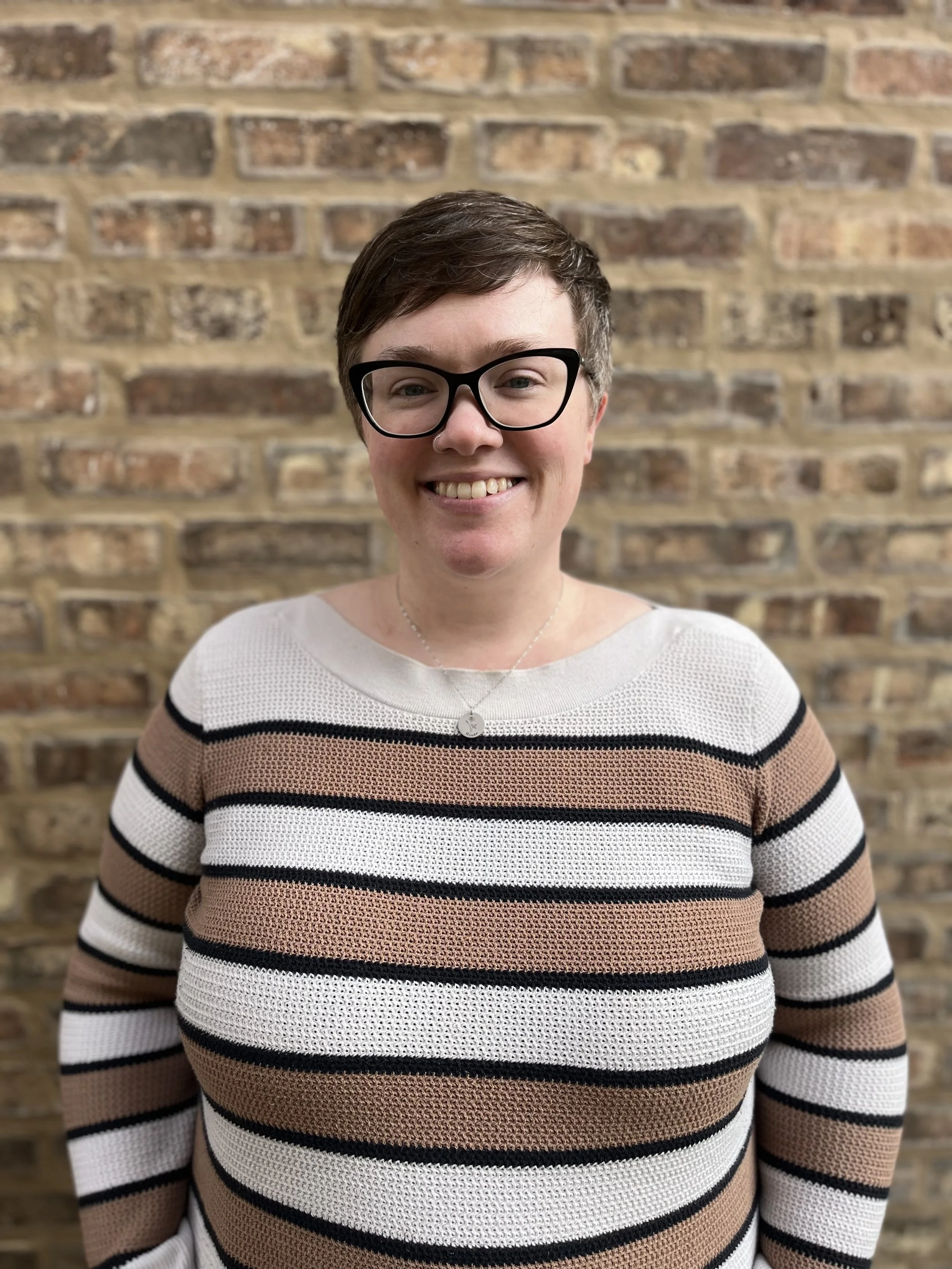
Dr. Ashley Molin (she/her)
I received my Doctorate in Psychology (PsyD) from The Chicago School of Professional Psychology, and the majority of my clinical training took place in community mental health centers and college counseling centers. That grounding matters to me because it shaped how I think about accessibility, about meeting people where they are, and about the many different forms that struggle can take.
My work has always centered the LGBTQ+ community. This isn't just a professional specialty, it's personal. As a queer person, I bring lived experience to this work alongside clinical expertise, and I feel a deep commitment to creating a space where LGBTQ+ clients don't have to explain, justify, or educate their therapist.
As a white therapist, I'm actively engaged in my own anti-racism work, and I'm committed to showing up as a co-conspirator with Black and Brown communities — in my practice, in my training work, and in my life.
Outside of therapy work, I also enjoy training and supervision, and find particular joy in working with early career clinicians. Personally, I have an undying love for geek culture. I'm an avid reader and love getting immersed in faraway worlds, whether through books, TV, or movies. Some of my favorite fandoms include Doctor Who, Firefly, and Marvel. If you're looking for a therapist who will help you while also pulling metaphors from your favorite fandom, please give me a call!
My Approach
My approach is rooted in existential and feminist therapy, which sounds academic, but what it really means in practice is this: I believe we're all wrestling with the same fundamental questions about life, meaning, connection, and who we are. Those questions don't look the same for everyone, but they're deeply human, and they're worth taking seriously.
I also believe that who you are can't be separated from the world you live in. The impact of patriarchy, racism, heterosexism, ableism, and other systems of oppression isn't abstract, it shapes how you move through the world, how you see yourself, and what feels possible. Good therapy has to hold all of that.
I think of therapy as a journey we are taking together. My role isn't to hand you a map and tell you where to go, it's to walk beside you, help you see the options that exist, and support you in choosing your own direction. While I may highlight options or explore possibilities, you choose the direction. You're the expert on you. I bring the psychology; you bring the self-knowledge. Together, we put both to work.
That said, I'm not rigid about method. I pull from ACT, DBT, mindfulness, and other approaches when they're the right fit — always in service of what's actually useful for you, not because it's what I happen to use with everyone.
Why Trailhead?
A trailhead is where a journey begins. It's the spot at the edge of the woods where the path stretches out in front of you, where you take a breath and decide to start walking.
In therapy, I think of myself as a trail guide. I'm not here to lead you somewhere I've decided you should go. I'm here to walk beside you, point out the forks in the path, and help you think through what each direction might mean for you. You set the pace. You choose the route. I'm just here to make sure you don't have to navigate it alone.
The name Trailhead felt right because that's exactly what this is: a starting point. Wherever you're headed, this is where we begin.